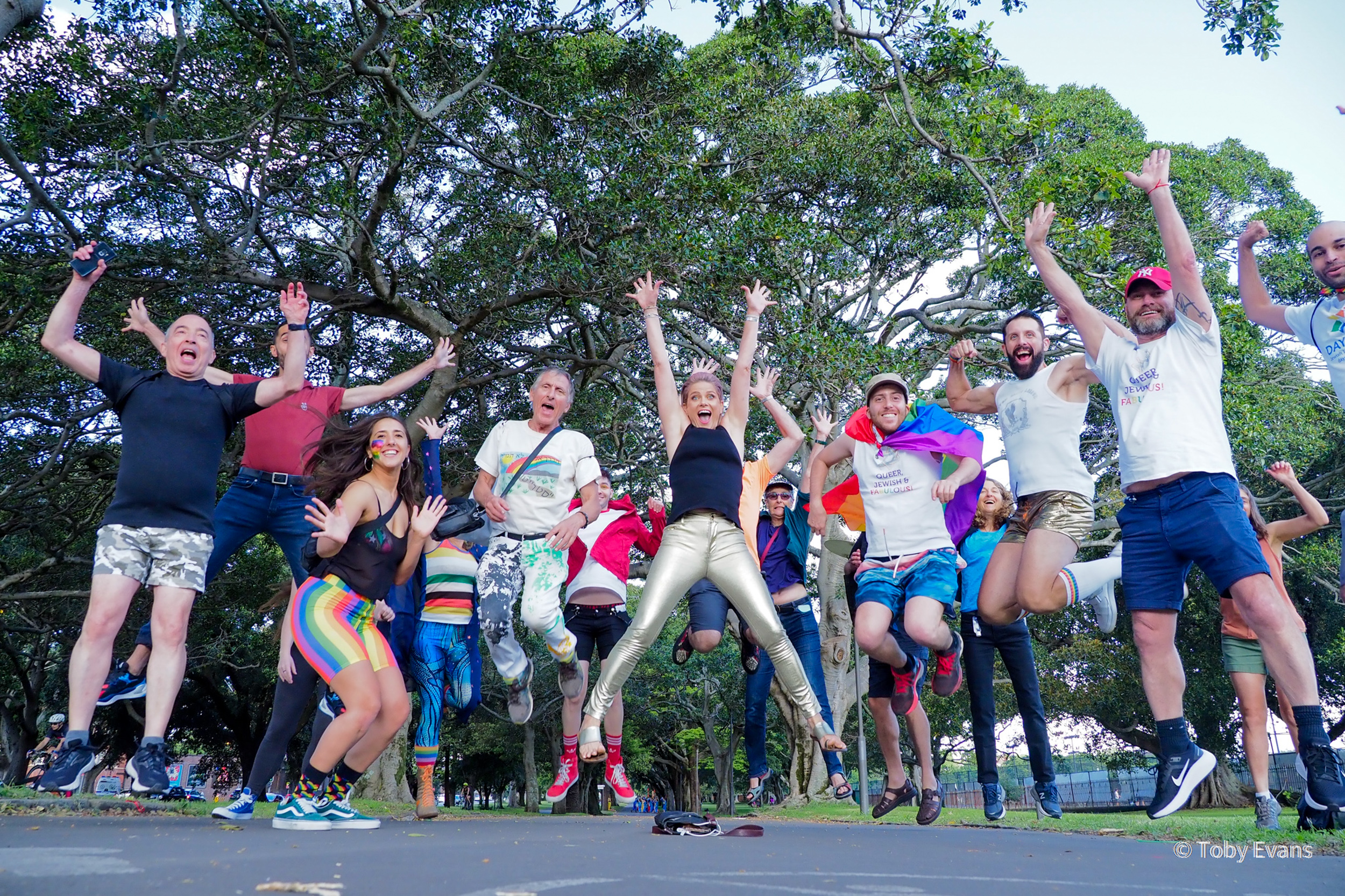
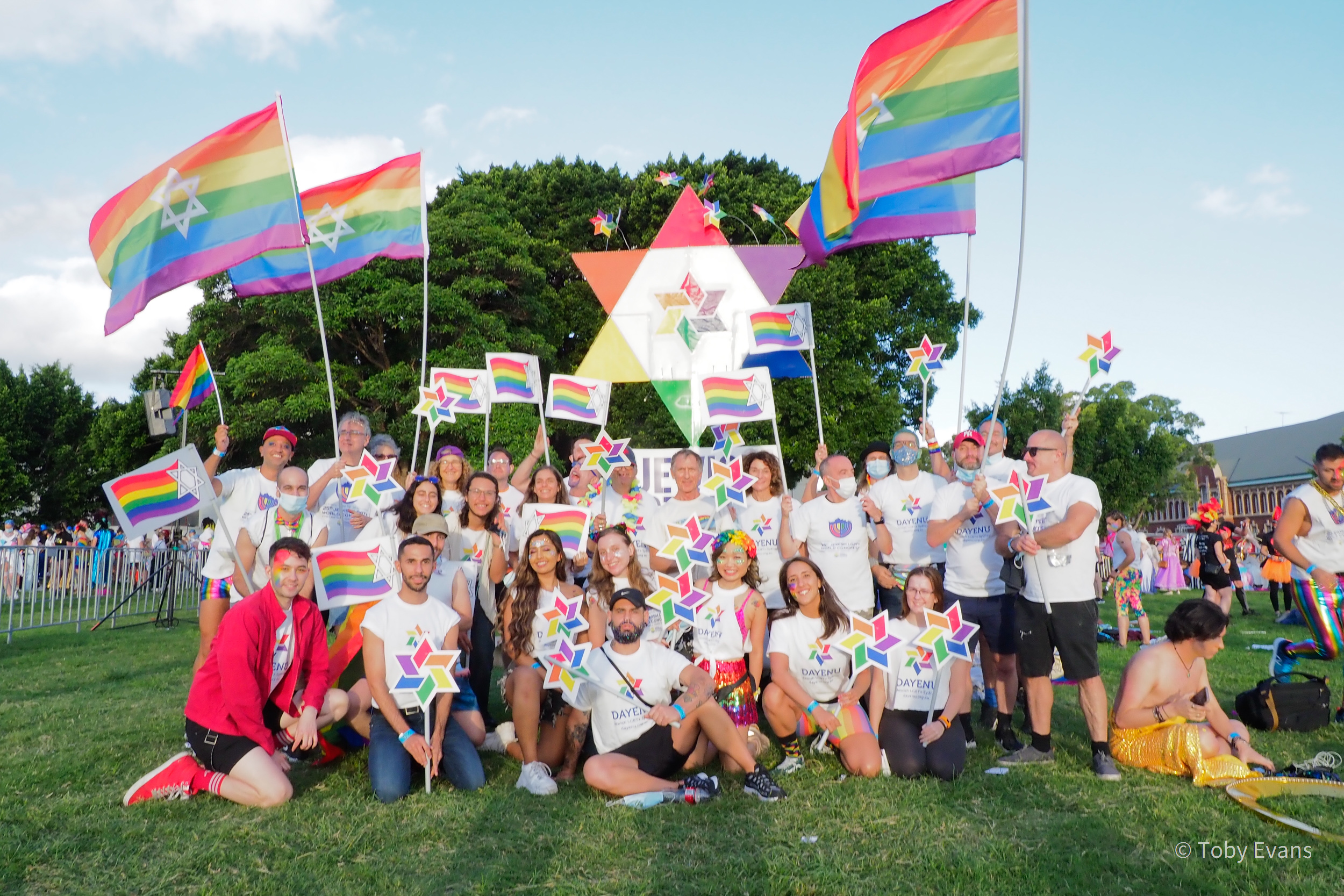
Time for us to say Dayenu
© Justine Armstrong
first published in the Australian Jewish News 7 April 2000 As
Jews, many of us have been on the receiving end of everyday oppression in the
form of jokes, stereotyping or discrimination by unthinking or unaware
gentiles. It is often said that antisemitism comes from ignorance about Jews.
The same can be said for homophobia within the Jewish community. If you doubt
this and you do not support Jewish lesbians and gays, ask yourself how many you
know and how well you know them.
Stereotypes for both Jews and gays are common. Think of some of the words
you have heard associated with each: miser, promiscuous, ostentations, immoral,
pretentious, outlandish, pushy... and so it goes. We must be intelligent enough
to understand that these are stereotypes that do not apply to every person.
Antisemites and homophobes alike justify their positions. But the bottom
line is they hurt people. Rabbi Milecki (AJN,16/3) says it is 'in' to be gay or
support gay people and refers to morals as "clothes that can be discarded
in favour of the latest fashions". The woman I love, my life partner, is
not a fashion accessory. The support of some within my family has taken many
years to develop. We are now closer as a family than we have ever been. Isn't
that what Jewish tradition supports and encourages?
Silence implies consent.
The suicide attempt rate for young lesbians and gay men is four to five
times higher than in the young heterosexual population (Youth Studies
Australia, 1998). Lesbians are six times more likely to be physically assaulted
than other women and gay men are four times more likely to be physically
assaulted than other men (NSW Police Service, 1995) - this includes Jewish gays
and lesbians.
How many of us are still outraged by the silence of Germans, Hungarians and
Poles during the Holocaust? How could they silently concur with this massive
violation of human rights? Many of these people justified their silence. How
many of us in this community will justify ours? The scale may be different. The
year may be different. But the disrespect and disdain for people who do not
conform to a particular cultural or religious ideal is the same. The
unacceptable rationalisations are the same. Many gay and lesbian Jews are at
worst, shunned, condemned and abused, and at best, misunderstood, pitied and
prayed-for.
By being silent, we as a community are contributing to and perpetuating the
problem. How many people will have to suffer or suicide before we realise the
cost of our silence?
Rabbi Milecki also says that "it is difficult to write critically of an
issue which 'political correctness' - the idol of new age gurus - demands
silence." Although I don't personally know any new age gurus, I can
confidently say that many people in this community want to raise this issue,
bring it to light and welcome open discussion. Clearly, as we saw in last
week's issue of the AJN, there are more traditional groups trying to silence
the dialogue.
Rabbis Gutnick, Milecki and others say homosexuality is immoral and equate
it with all sorts of evil behaviour. If it is immoral to love, respect and
cherish another human being, then I wonder at the teachings of some who call
themselves leaders in this community. And I wonder at those who follow. Wanting
love, respect and fulfilment in a relationship is not restricted to the
heterosexual majority.
It is hard enough to find a relationship that is truly based on respect,
deep love and support. If you are lucky enough to find this, I believe it is a
blessing. To then have to contend with those denigrating and negating that
relationship is unforgivable and cruel. Is this what we want to encourage in
our leaders and community members?
If you want to make enemies, try to change something. Woodrow
Wilson
Orthodox Rabbis have reinterpreted the torah to cease discrimination against
those who are deaf and disabled. We laugh uncomfortably at how this could have
ever been the case. Now we know better. On this issue however, the Rabbis say,
"my intention is to protect 'my people' from harm, to promote G-d's
teachings as they are written in the Torah - one cannot change the Torah to
suit oneself." This is misleading. And nowhere in the Torah does it say
anything about women in relationship with women. If the orthodox are committed
to taking the writings of Leviticus literally, they should have not one iota of
concern about women being together. If, however, they are taking what Leviticus
says about men and applying that to women as well, then they themselves are
interpreting the Torah. This inconsistency and hypocrisy is unacceptable and is
doing tangible damage to innocent and loving reform, conservative and orthodox
members of this community.
If Rabbis choose to interpret the Torah, then I believe this interpreting
should be applied to include lesbians and gay men, as it has been to disabled
and deaf people. Not a simple solution, but one that could begin with open
discussion and compassion.
The important thing is never to stop questioning. Albert
Einstein
The Jewish religion and tradition prides itself on being
family-oriented and committed to education. There are constructive ways to
approach the Leviticus teachings, without denying or changing them. We can
explore, for example: the contextual translation of to'evah, the many teachings
within Leviticus and its overall lessons, the context of the times within which
this line was written, the issue of relationship versus sex, the concept of
G-d's creation of all people and other issues affecting many Jews such as
non-observance of Kashrut, Shabbat, and some commandments, none of which are
spoken about with such vehemence as this. But don't take my word for it, or
anyone else's for that matter. There is a limit to what can be included in a
brief article like this, so I urge people to educate themselves, ask questions,
read up, attend debates.
When the Dayenu group came together in November last year, there was a sense
of wonder and excitement. Many of us had never met before, but most of us knew
of someone who knew someone who knew us. The links were there. The shared sense
of history was there. And here we were, suddenly faced, not with the dregs of
the community we had been led to believe, but strong, independent, successful
people, all cloistered away in their own lives, isolated from a true sense of
community and shared vision. That first meeting filled me with such a sense of
excitement that I cancelled two overseas work trips to help organise and be
part of the group.
Dayenu loosely translates as 'enough', as many would know. For me,
Dayenu means we have had enough of the ignorance, denial, narrowness and
mistreatment that has plagued Jewish gays and lesbians and their families for
generations. And it also means, it would be enough for us, if the community
would embrace our difference in the way it has embraced other types of
difference.
During the first ever lesbian and gay Shabbat dinner at Shalom College on
March 3rd, several students peered out from their balconies to take a look at
the group below. They wanted to see the people causing certain members of this
community to vow to picket and protest the Shabbat dinner. What did they see? A
group of deranged immoral misfits? They saw seventy well-dressed professional
men and women aged between twenty and sixty sitting in chairs, transfixed, many
of them crying tears of joy listening to sermons and song delivered by four
rabbis.
Oppression can only survive through silence. Carmen de
Monteflores
"If you are not part of the solution, you are part of the
problem." You may be familiar with this quote, although you might not
think you're part of the problem. The problem is silent complicity for
emotional and physical violence, discrimination and exclusion of Jewish gays
and lesbians. One solution is to speak out against these things. Judging from
the many letters published in the AJN, some people in the community are clearly
deciding to lift the silent veil of oppression that has shrouded many for so
long and speak out for the rights of every person to love who they love.
Many people wait for the leaders in this community to make change. Few
changes in history have happened that way. How grateful are we for the civil
rights movement in America where the actions of some brave individuals began to
ripple through their communities and beyond until leaders reversed the
discriminatory laws. In Australia, our government prevented Aboriginal people
and women voting until people began to do something at the personal and
community levels first.
We cannot wait for change to occur. It is up to us to show the leaders where
our hearts and minds are until they respond for the good of the people in the
community. I believe it is up to all members in this community to be willing to
learn more about the myths and stereotypes we have been fed for too long, as
well as the corresponding realities. And I believe it is up to each member of
this community to say Dayenu. Enough.
Justine Armstrong is a registered psychologist, writer and corporate
professional development trainer. She is also a member of Dayenu. |